Content
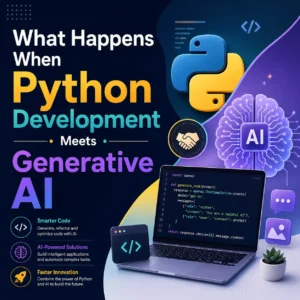
Python has long been a cornerstone of artificial intelligence (AI) development, celebrated for its simplicity, versatility, and an extensive ecosystem of libraries. In 2025, as AI technologies continue to evolve at an unprecedented pace, Python remains at the forefront, powering innovations across industries. This article explores how Python is shaping the future of AI and why it continues to be the go-to programming language for developers worldwide.
Python: The Preferred Language for AI
1. Ease of Learning and Usability
Python’s beginner-friendly syntax enables developers of all skill levels to build and deploy AI models quickly. Its human-readable code simplifies collaboration and accelerates project timelines.
2. Extensive Library Ecosystem
Python boasts powerful libraries like TensorFlow, PyTorch, Scikit-learn, and Keras, which provide pre-built tools for data manipulation, neural network design, and machine learning.
3. Community Support
A thriving community of developers contributes to Python’s growth by offering open-source solutions, documentation, and troubleshooting assistance.
4. Cross-Platform Compatibility
Python applications run seamlessly across various platforms, making it an ideal choice for AI systems deployed in diverse environments.
AI Applications Powered by Python in 2025
Python is instrumental in driving innovations across the following domains:
1. Healthcare
AI models developed with Python are revolutionizing diagnostics, personalized medicine, and drug discovery. Tools like TensorFlow are used to build deep learning models for analyzing medical images and predicting patient outcomes.
2. Autonomous Vehicles
Python facilitates the development of AI algorithms that enable real-time decision-making in self-driving cars. Libraries like OpenCV and PyTorch assist in object detection, path planning, and sensor data analysis.
3. Natural Language Processing (NLP)
Python is the backbone of NLP advancements, from chatbots and virtual assistants to real-time language translation. Libraries such as SpaCy and NLTK are empowering AI to better understand and generate human language.
4. Finance and Banking
Financial institutions leverage Python-based AI models for fraud detection, credit scoring, and algorithmic trading. Python’s data visualization libraries, like Matplotlib and Seaborn, enhance financial data analysis.
5. Robotics and Automation
Robotics systems use Python for AI-driven control mechanisms, enabling robots to adapt to changing environments and execute tasks autonomously. Frameworks like ROS (Robot Operating System) integrate seamlessly with Python for robotics programming.
Python Libraries Driving AI in 2025
1. TensorFlow
Widely used for developing machine learning and deep learning models, TensorFlow supports large-scale AI applications and allows developers to experiment with neural networks effortlessly.
2. PyTorch
PyTorch is renowned for its dynamic computational graph, which simplifies the debugging and visualization of AI models. It has become the preferred library for research and development in academia.
3. Keras
Built on TensorFlow, Keras provides a user-friendly interface for designing and training deep learning models, making AI development accessible to non-experts.
4. Scikit-learn
This library is essential for implementing machine learning algorithms such as classification, regression, and clustering. Its simplicity makes it suitable for beginners and professionals alike.
5. OpenCV
OpenCV is a vital tool for computer vision tasks, including image recognition, video analysis, and object detection, which are critical for AI applications in 2025.
6. Hugging Face Transformers
Hugging Face has emerged as a leader in NLP, offering pre-trained transformer models that reduce the time and resources needed to deploy advanced language processing systems.
Python’s Role in AI Research
Python continues to dominate AI research, with numerous breakthroughs attributed to its robust tools and libraries. Universities and research institutions rely on Python to simulate experiments, process datasets, and publish reproducible studies. Its flexibility and integration capabilities allow researchers to push the boundaries of AI.
The Demand for Python Developers
With AI at the core of technological innovation, the demand for skilled Python developers is soaring. Companies are seeking professionals who can design and deploy AI models to solve complex problems. Many organizations prefer to Hire Dedicated Python Developer in India due to the availability of skilled talent, cost-effective solutions, and a growing ecosystem of Python experts.
Why India is a Hub for Python Development
1. Abundant Talent Pool
India produces thousands of skilled Python developers every year, trained in the latest AI technologies.
2. Cost-Effective Solutions
Competitive pricing without compromising quality makes India an attractive destination for outsourcing Python development.
3. Strong Ecosystem
Collaboration with IT hubs, tech parks, and startups ensures a steady flow of innovative Python solutions.
Future Trends: Python and AI in 2025
1. Integration with Quantum Computing
Python is becoming the language of choice for quantum computing research, enabling AI models to solve problems previously deemed unsolvable.
2. Federated Learning
Python is advancing federated learning, which allows AI to train on decentralized data sources without compromising user privacy.
3. AI for Edge Computing
Python tools are optimizing AI models for edge devices, enabling real-time analytics in resource-constrained environments.
4. Ethical AI Development
Python frameworks are emerging to ensure AI systems comply with ethical guidelines and avoid biases.
Challenges and Opportunities
Challenges:-
1. Scalability Issues
Python’s interpreted nature sometimes hinders performance for large-scale AI projects.
2. Dependency Management
Managing multiple libraries and dependencies remains a challenge for developers.
Opportunities:-
1. Enhancements in Python Performance
New tools and techniques are addressing Python’s speed limitations, making it more competitive for enterprise-scale AI.
2. Customized Solutions
The growing demand for tailored AI applications creates opportunities for Python developers to innovate.
Note
As we step into 2025, Python continues to power the next wave of artificial intelligence by providing the tools, libraries, and community support needed to drive innovation. Its adaptability and simplicity make it indispensable for both researchers and businesses aiming to stay ahead in the AI revolution. Companies looking to build cutting-edge AI solutions should consider the advantages of hiring skilled developers. By choosing to Hire Dedicated Python Developer in India, businesses can leverage expertise to create robust, scalable, and cost-effective AI applications that define the future.